From the class Product Design Studio 6 · Spring 2023
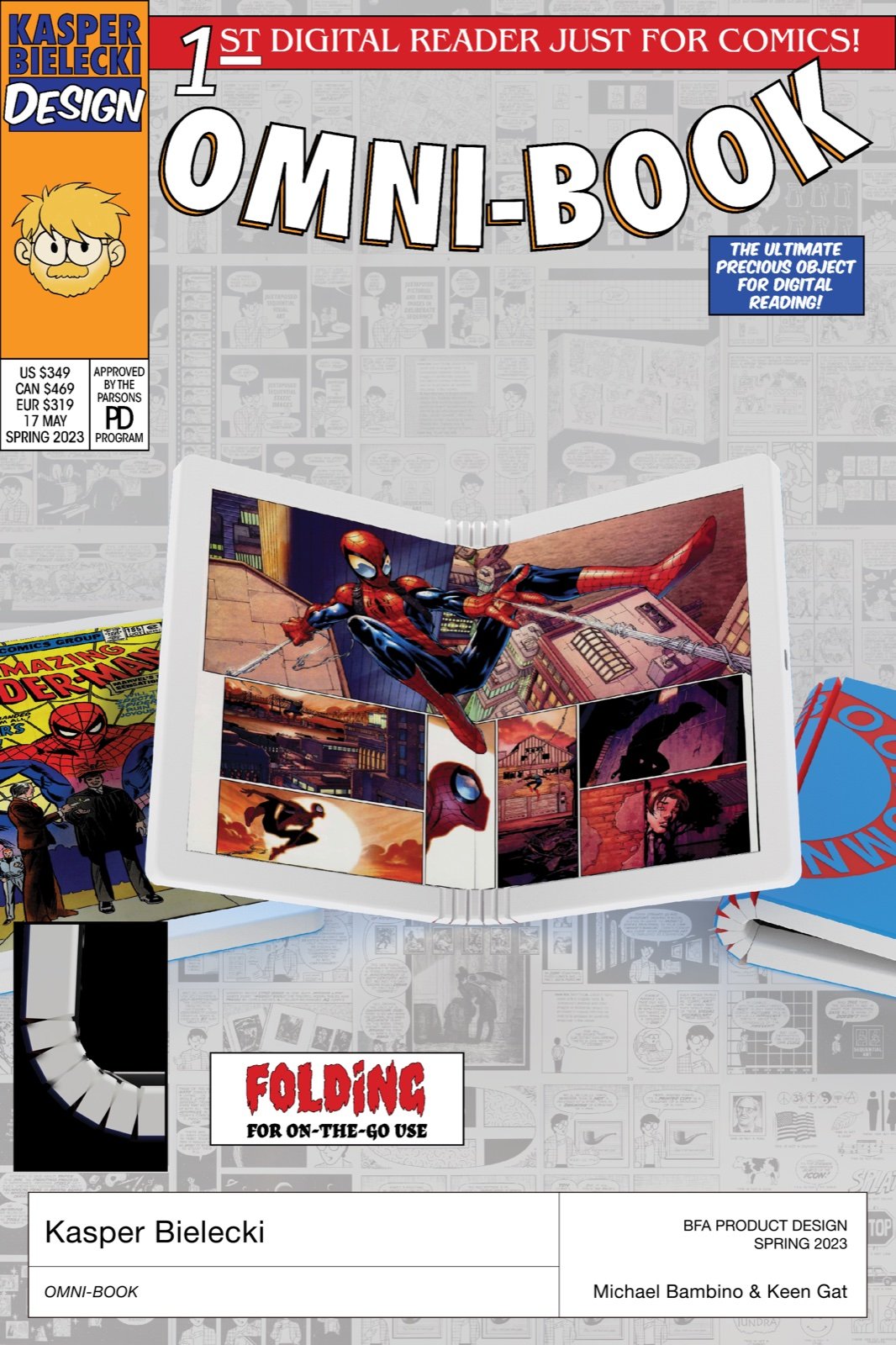
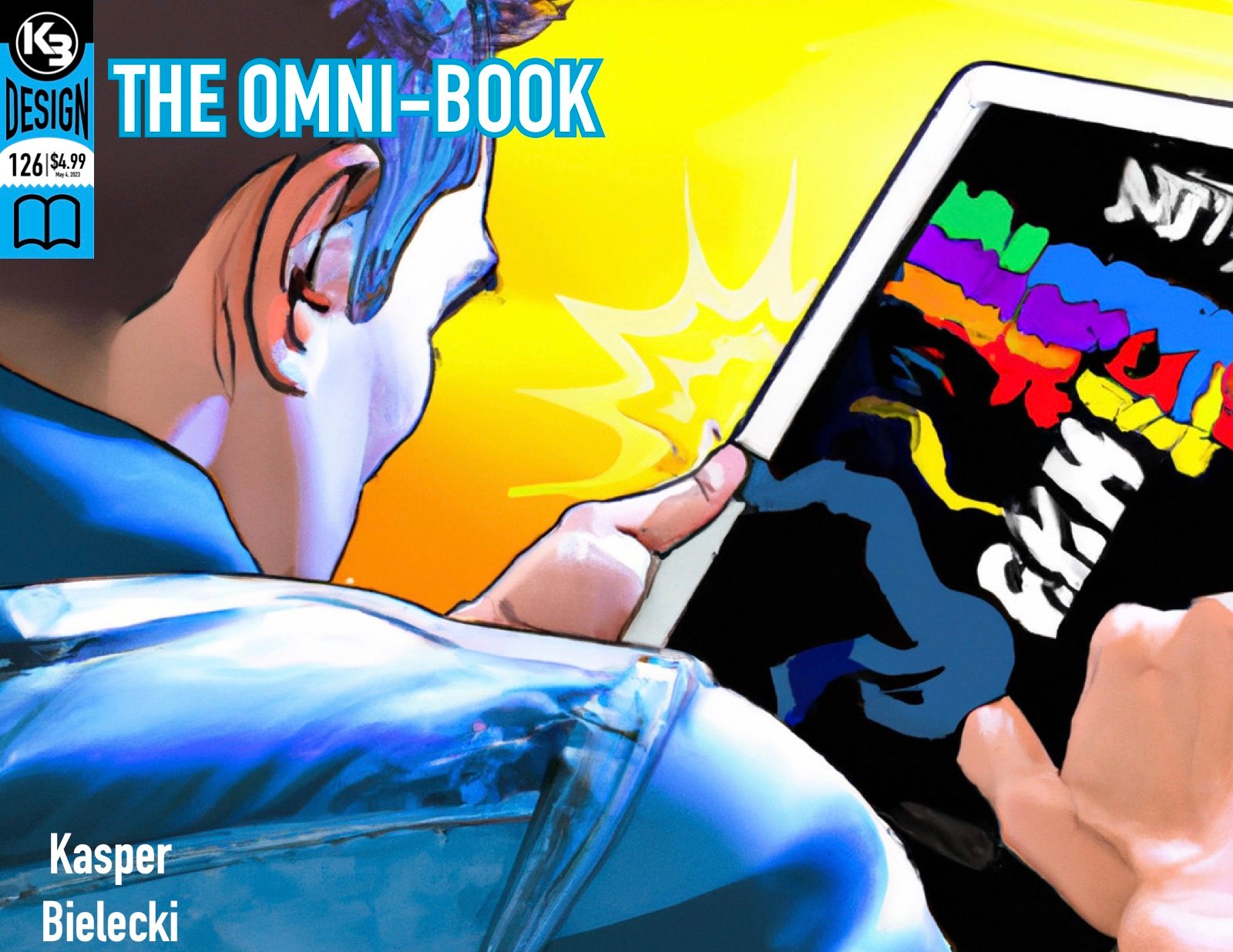
The Omni-Book is a culmination of all my product design related work up until this point in my life. The Omni-Book, as a product, is a digital reader specifically designed for comic books. It is designed to support all major comic formats. It makes use of an 12.7” E-Ink Gallery 3 display. These displays are foldable, and use physical cyan, yellow, magenta, and white particulates to simulate how ink is printed on a page, at the same exact resolution at which comics are printed. The technology also only makes use of power when changing what is displayed. This is due to the fact that the screen does not emit light but rather reflects light, exactly as a piece of printed paper would.
The Omni-Book, as a project, is a love-letter to many of my passions and interests. Among these are reading comic books, super heros, 3D printing, and consumer electronics. These are all things that I have grown up with, taken with me, and made part of of my identity. In the broadest sense I have been reading comics as long as I could read. In a more traditional sense my friend Kevin introduced me to reading comics in middle school. I have zero recollection to when I first got into super heros, they, as far as I am concerned, have been an ever present pillar of my existence. I got my first 3D printer in my freshman year of high-school and I am proud to say that when 3D printing is now mentioned, anyone who knows me and is in that room, turns to face me. Lastly, consumer electronics have always been an interest as well. I built my first computer with my dad when I was 10. Consumer electronics have also been a big factor in me persuing industrial design.
In the end, my capstone project could never have been anything but this.

I have been reading comics for most of my life; pretty much as long as I have been able to read. Comics have played an important and consistant role in my life. They have helped me make and maintain some of my best friendships, they have taught me about myself and helped shape my beliefs and views of the world, and they have perhaps most importantly, served as a method of escape for me when I need a break.
When it was time for capstone to start, I was told to have two pitches ready for projects that I had significant experience in. Admittedly I had trouble picking but eventually the two projects that I settled on were my Coffee Bio-Material project from my Product Design Studio 3 class and my Modular Stools Project from my Build Your Own Factory class. These were both projects that I enjoyed working on a lot and taught me a lot about how I like to work and design. Despite this neither of them felt quite right. Either way the proposals needed to be made for the first day of classes.
Historically, graphics have never been my strong suit so I really wanted to start off the semester swinging with distinct and impressive visuals. To achieve this I turned to the visual language of comics and formatted my capstone pitch pin-ups as super hero comics.
The Coffee Bio-Material pin-up took the form of Action Comics #1000 and the Modular Furniture pin-up took the form of Giant Sized X-Men #1.
I obviously did not end up going with either of these options however I think It is beautiful how from the very start comics were in the loop and part of my process. They were there before I realised that obviiously there was nothing else my project could have ever focused on.
Eventually in capstone discussions, I proposed continuing a project from my Product Design Studio 4 Class, The Comic Sock, a protective soft case for transporting comics on the go. My professors and peers began to recognize the passion I felt and we all knew that I was getting closer but I still wasn’t quite there yet. The comic Sock already felt finished.
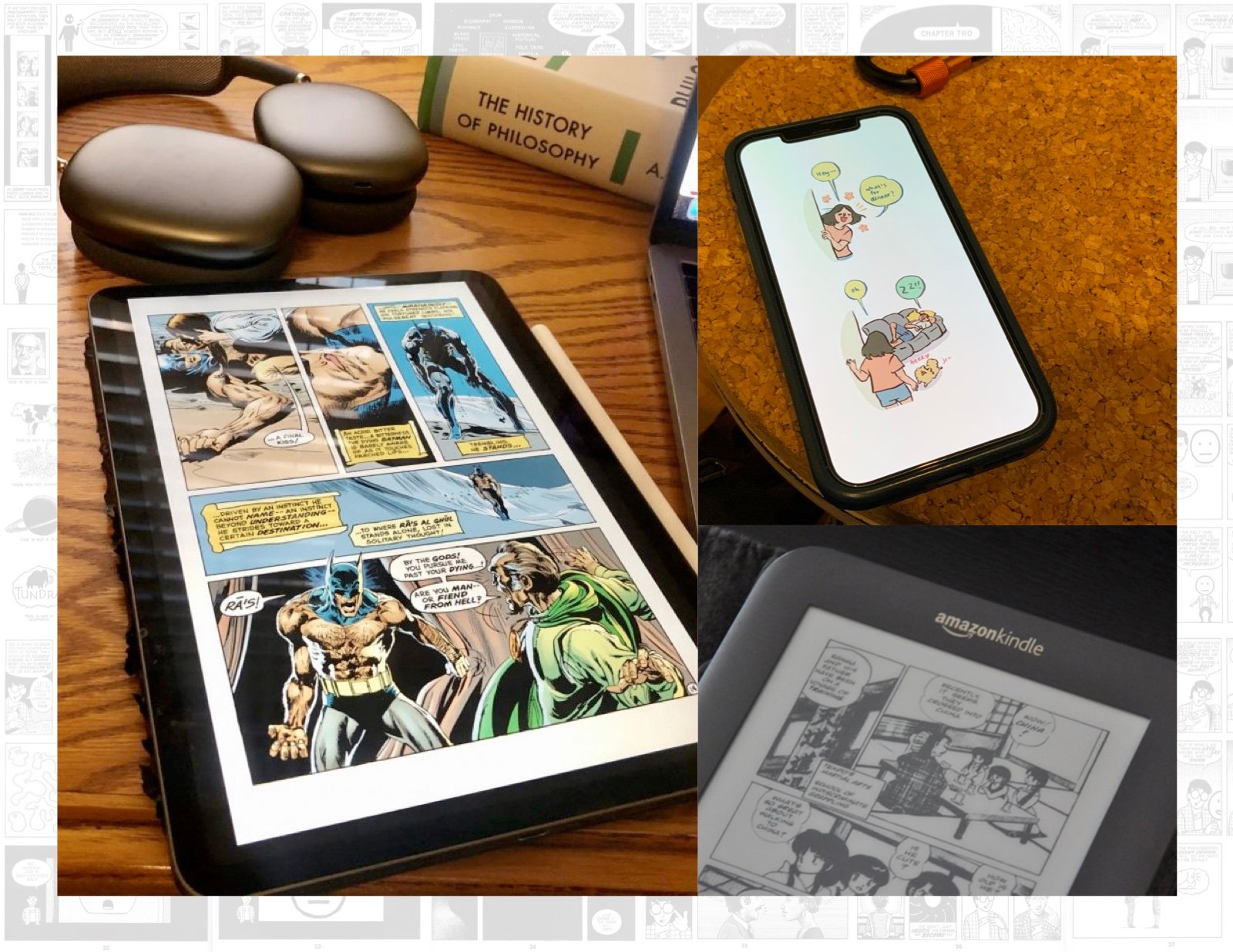
Once I realised that I wanted my project to revolve around comics I began to ideate quickly and roughly on where I could take the subject matter. The Comic Sock was good but it felt done already. I began explorations of digital comics, and playing to see what they might look like if they were printed. Giving them forms as precious objects rather than the impersonal form they rely upon and take on currently.
I also looked at how comics are distributed, sold, purchased, displayed, and read. One other idea that I had was a quick binding method for comics. Trade paper back comics are the fastest growing market segment in comics right now. A trade paper back comic is effectively a collection of 4-6 periodical single issue comics reprinted in a thicker and higher quality book without any ads. I thought it would be interesting if people could bind their own single issue comics together into trade paperbacks week to week as they purchased the periodicals instead, as the periodical issues are where most comic stores make most of their income.
Another Idea that I looked at was comic storage. I thought it was interesting that comics are such a visual medium yet when they are stored the visuals are hidden. I thought about taking inspiration from panel layouts of comic pages and translating that to shelving that would embrace and show off the comics’ covers.
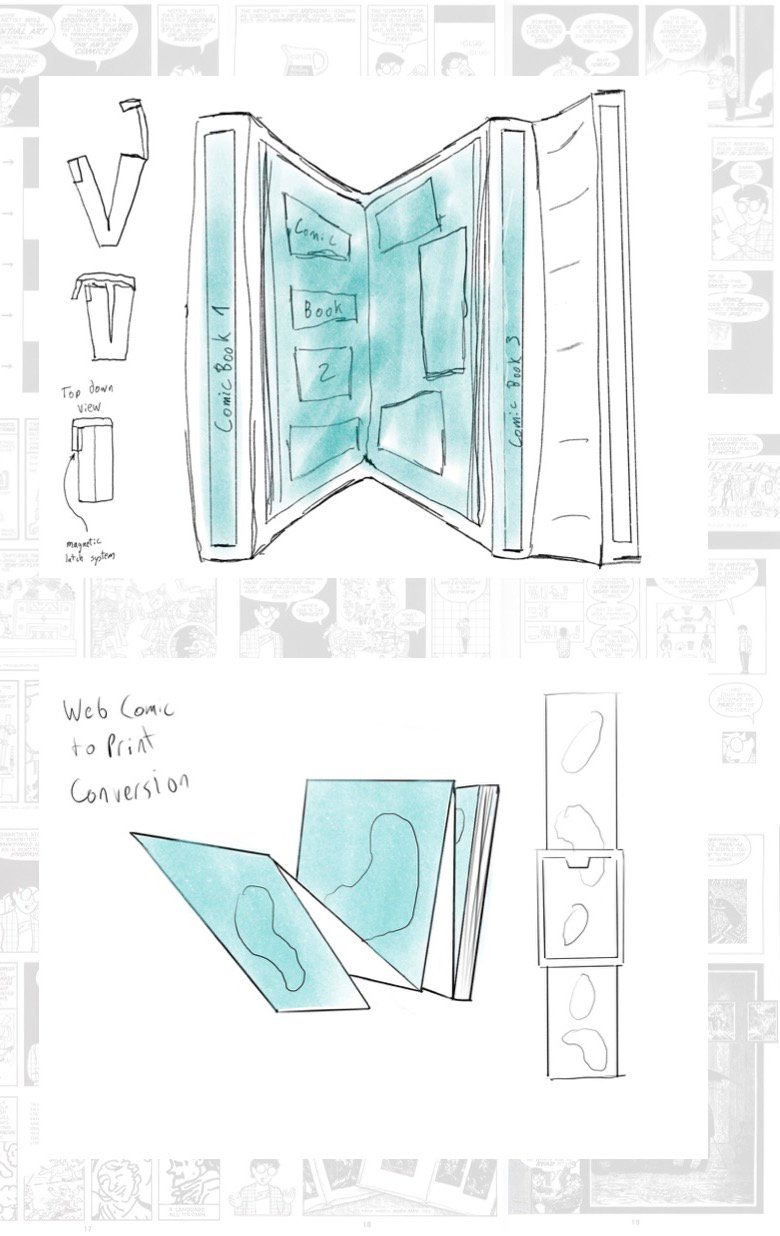

Eventually my ideation landed me with three potential ideas to move forward with. The first one was a digital reading device specifically designed for enjoying the medium of comic books. The second direction was rethinking my comic sock project as I still was not entirely satisfied with where that project ended. The third idea was a shelving system for dynamically displaying comics in a visually striking way that was inspired by how panels are layed out within a comic page.
Needless to say, I went with the digital reading device for comics.



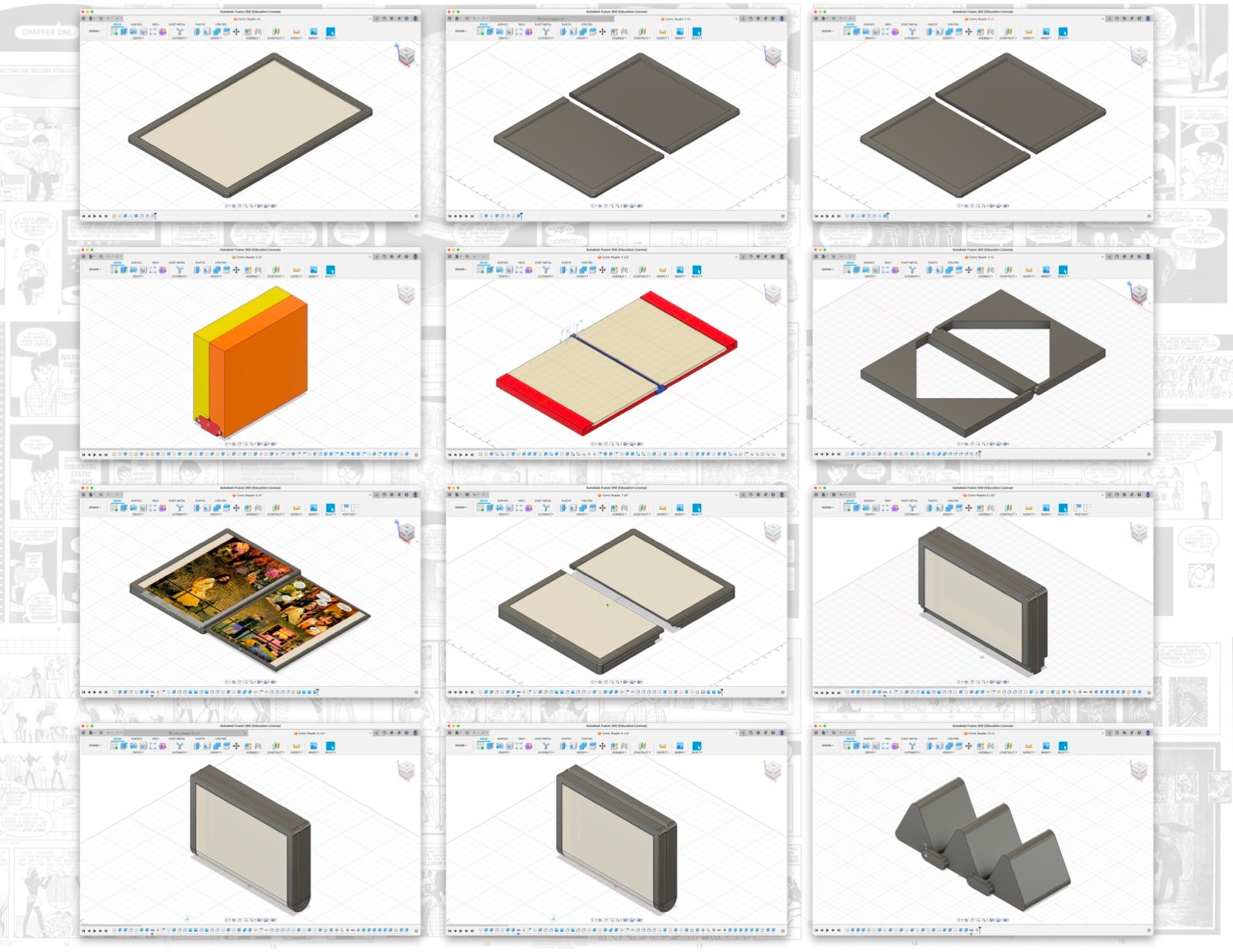
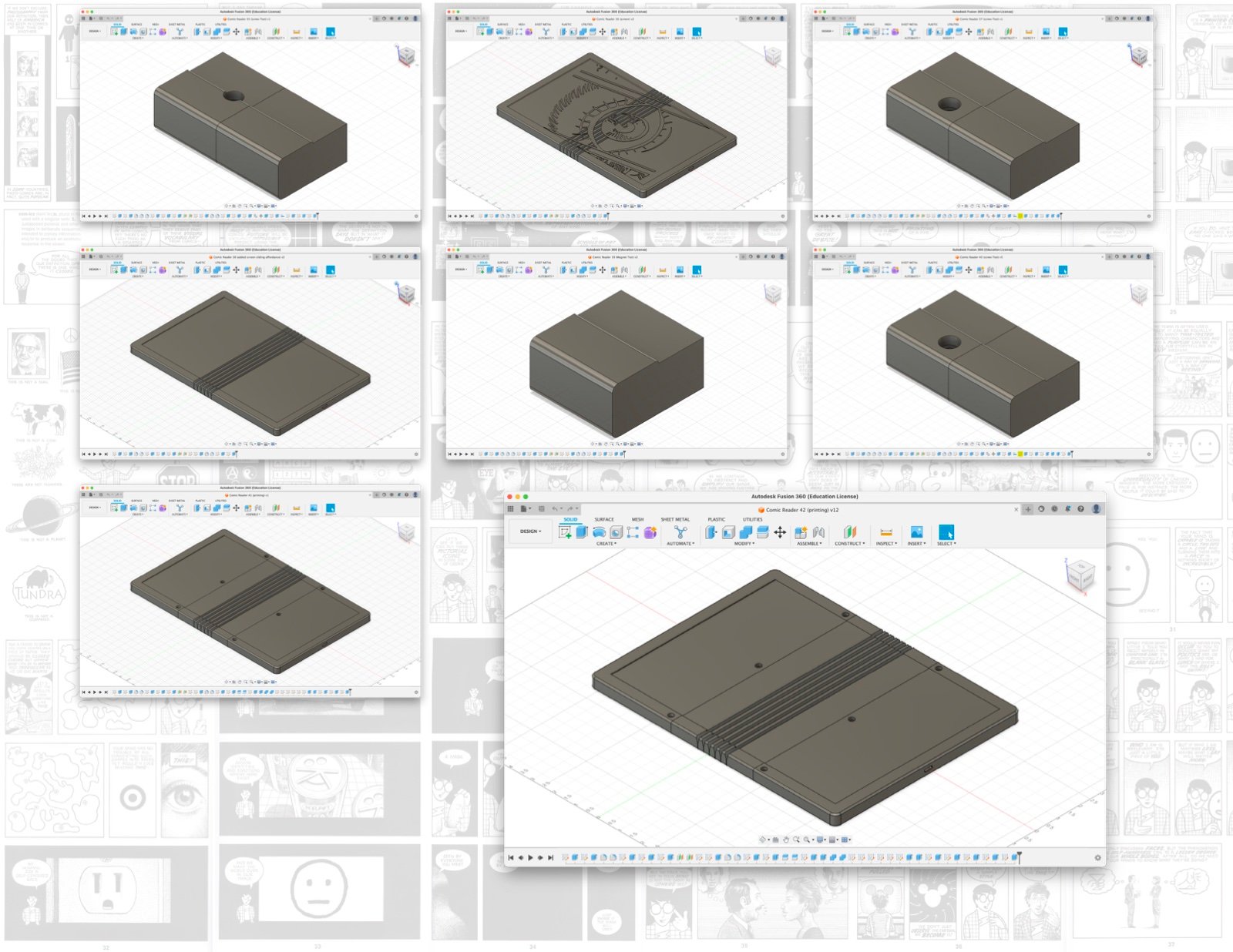
My final prototype was designed with 3D printing in mind. This was important to me as 3D printing was effectively my entry point into product design and now is part of my final project. I got and assembled my first 3D printer in my freshman year of highschool and have never stopped. Since then I have expanded to five 3D printers total. I have since also, expanded my printing operation to help others. I wanted to use this project to flex all the 3D printing knowledge, tricks, and techniques I’ve picked up along the way.
The back of the device can be organized into 4 sections: the inner circle, the ring, the text, and the rest of the back. Everything except for the ring was printed on the first layer. The ring was then printed as a bride-fill one layer above the rest. All layers are printed at 45 degree angles, switching the angle direction each layer. A bridge fill however is printed at 90 degrees. This change in layer direction catches the light differently and therefore makes the letters below really pop.
The printing technique was good but was then really amplified by my material choice. For the outside of the Omni-Book I chose a dichromatic filament. This type of filament is coextruded, making one side one color and the other side another color. When an object is printed with said filament it is effectively poloraized in terms of color, perpendicular to the print surface. Depending on what angle you look at the finished product from, you may see blue or red.
Including the dichromatic filament, I used 3 different filaments for both aesthetic and functional reasons. I used MatterHackers Quantum DualColor PLA, Hatchbox White PLA, and Overture Gray TPU. I used the White PLA for the bulk of the print, and particularly the bezels. I wanted to imitate and pay homage to the whitespace and gutters of comic pages. The TPU was arguably the most important material in the project and fascilitated the live hinge that I needed to have the fiolding function that I wanted.
To create the hinge I used a combination of rigid PLA and Flexible TPU. The PLA in conjunction with the shape of the hinge segments allowed the Omni-Book to curl up in the center. The segments were designed to have parallel 90 degree walls on the bottom that limit the Omni-Book in an open position. The top of the segments is agled at 15 degrees inward on either side. This allows for the hinge to close and create a rough semicircle. This hinge was printed in one piece with 3 material changes mid print. The layers where PLA and TPU interface I printed at 100% fill density to maximize surface adhesion. The rest of the part is printed at 20% fill to hit a balance between heft, weight, and material usage.
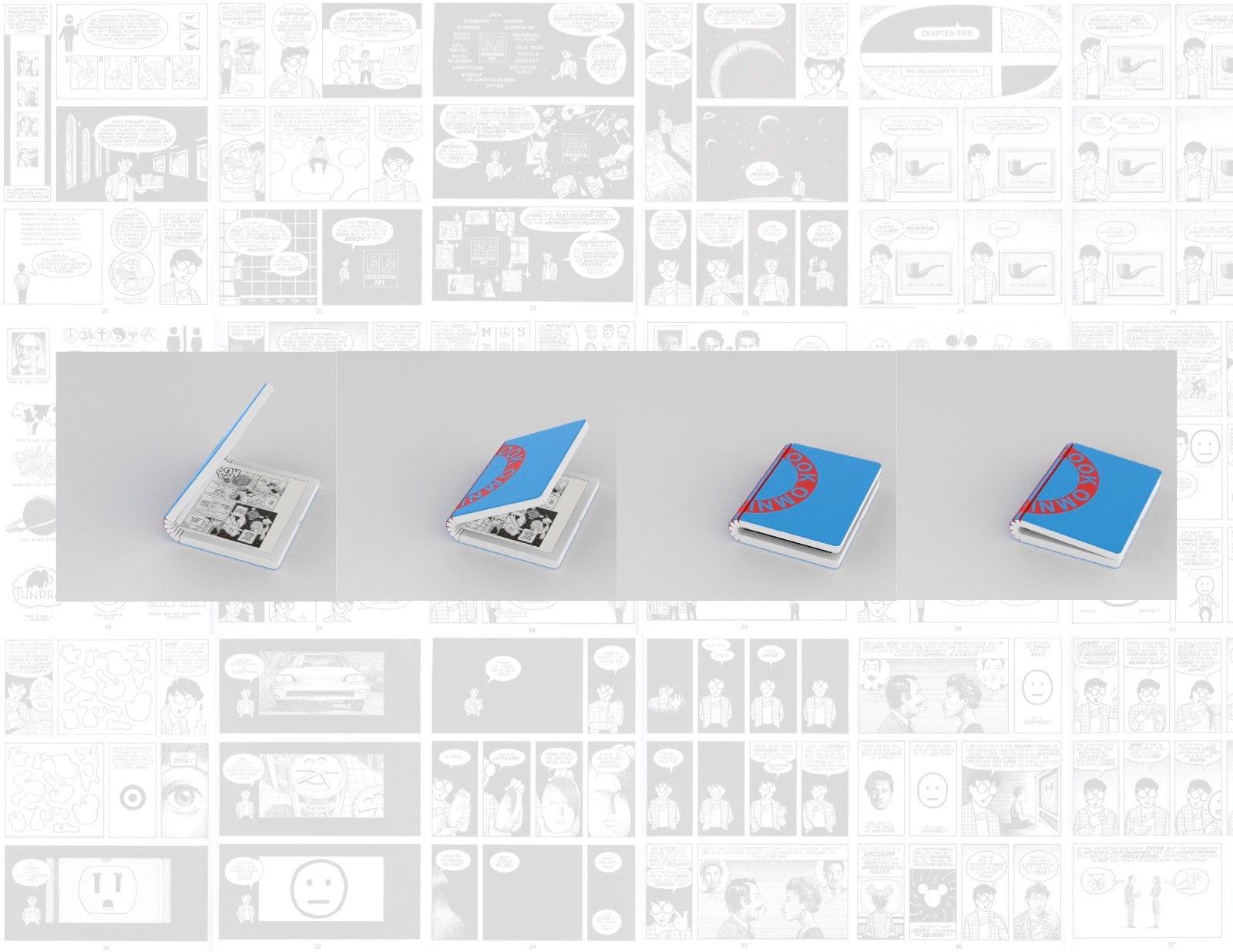
The other technique used in making this model was embedding non printed parts. There were two types of component embedded during printing: magnets and threaded nuts. The magnets were imbedded in the top and bottom bezels and the back face of the device. The bezel magnets keep the Omni-Book closed, as the hinge acts as a slight spring, keeping the book in an open position. The magnets in the back serve as a function of future proofing as I plan to design accessories that can snap onto the back.


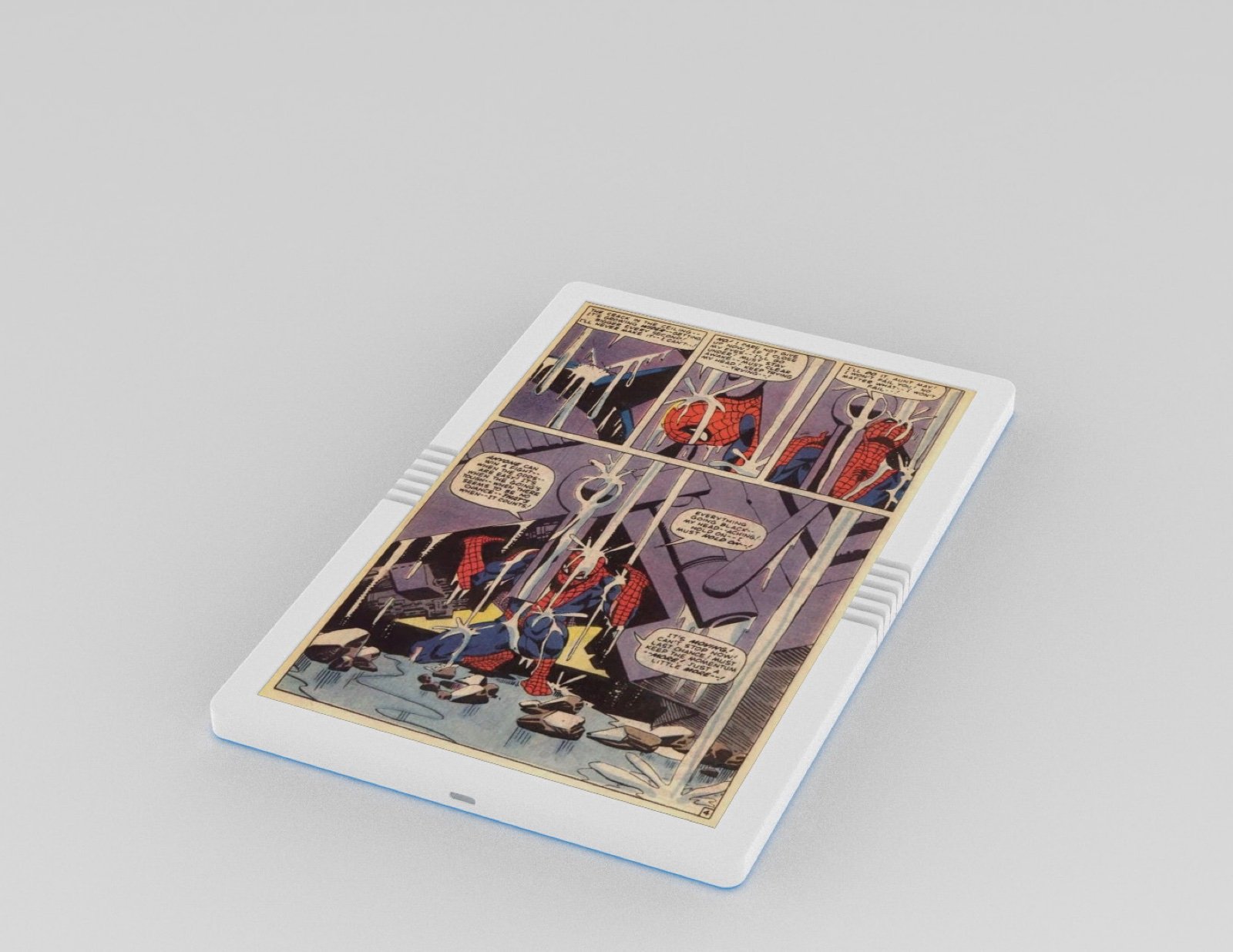
The final device will make use of a 12.7” (7.50” x 10.25”) E-Ink Gallery 3 display. The size of the display was a major point of design questioning. Initially the Omni book was going to have a 12.273” (6.75” x 10.25”) display as this is the exact size of a single standard American comic page. This felt a little on-the-nose and unresearched. I wanted a more informed and future proofed answer to my screen size question. Afterall, the project strives to not only support comics, but also reinvent and elevate them.
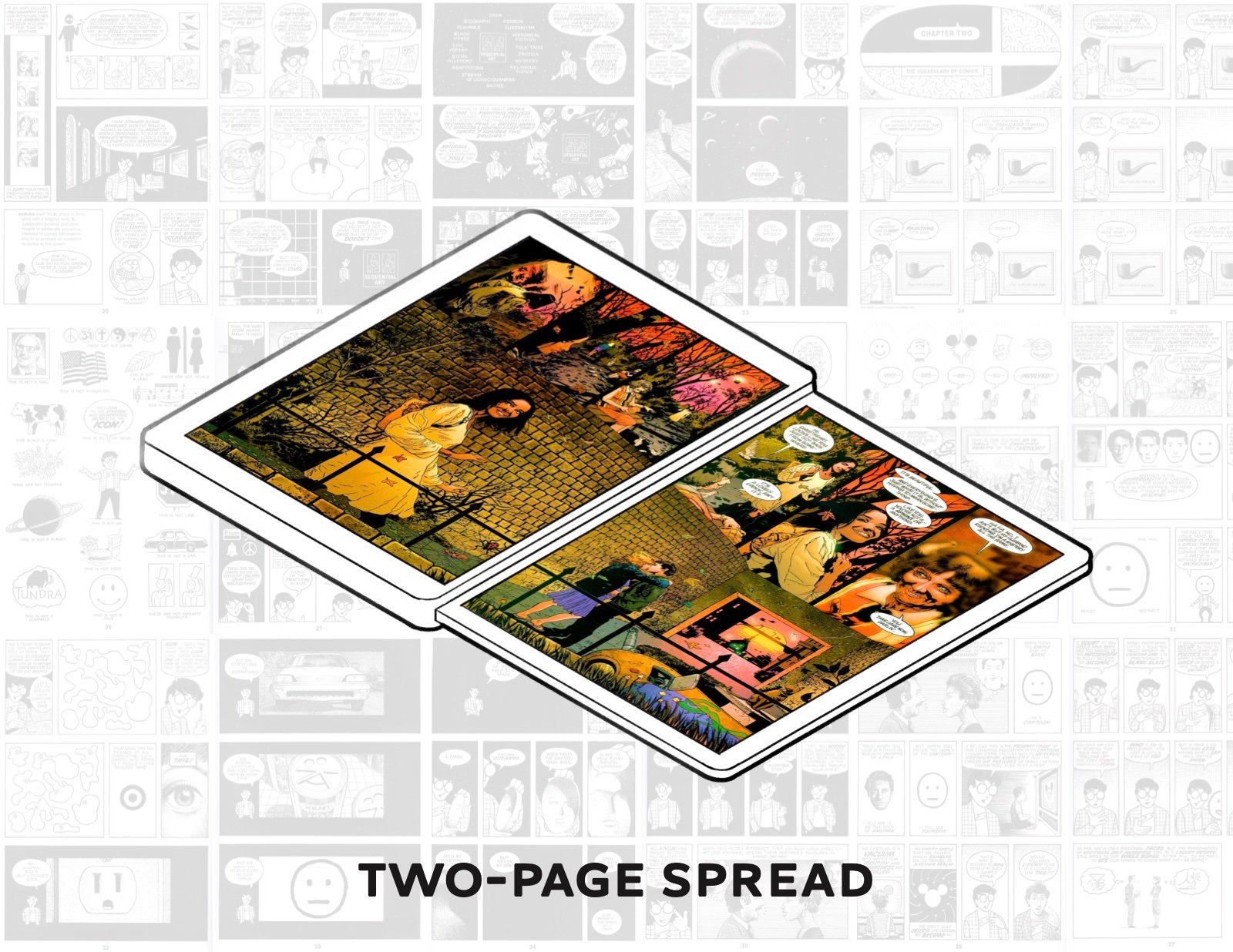
After looking into the industry and market some more I learned that manga actually makes up over 70% of yearly comics sales. Funnily enough a two page spread of manga (7.50” x 10.00”) is almost the same size as a single page of a standard american comic (6.75” x 10.25”). These two pieces of information led me to the final size of 7.50” x 10.25”. This takes the larger dimension from each of the largest comic standards in the world, this way each one can fit perfectly at a 1:1 scale. Zero comprimises. This does leave the final display with a bit of letter-boxing with each format but in return it never crops or resizes an image if you don’t want it to. This letterboxing also allows for UI elements to appear when needed without cutting into the content.
The other thing about the letter-boxing is that digital comics are inherently a reinvention of the medium and a potential future for the industry. Digital comics do not have to adhere to the physical standars of print. Infact many digital comics are already moving towards the path of infinite canvas comics. The letterboxing in a weird way speaks to this transition between the physical and digital media of comics. If the product could get popular enough I could imagine comics could perhaps start being created with the odd-ball 7.50” x 10.25” screen in mind.
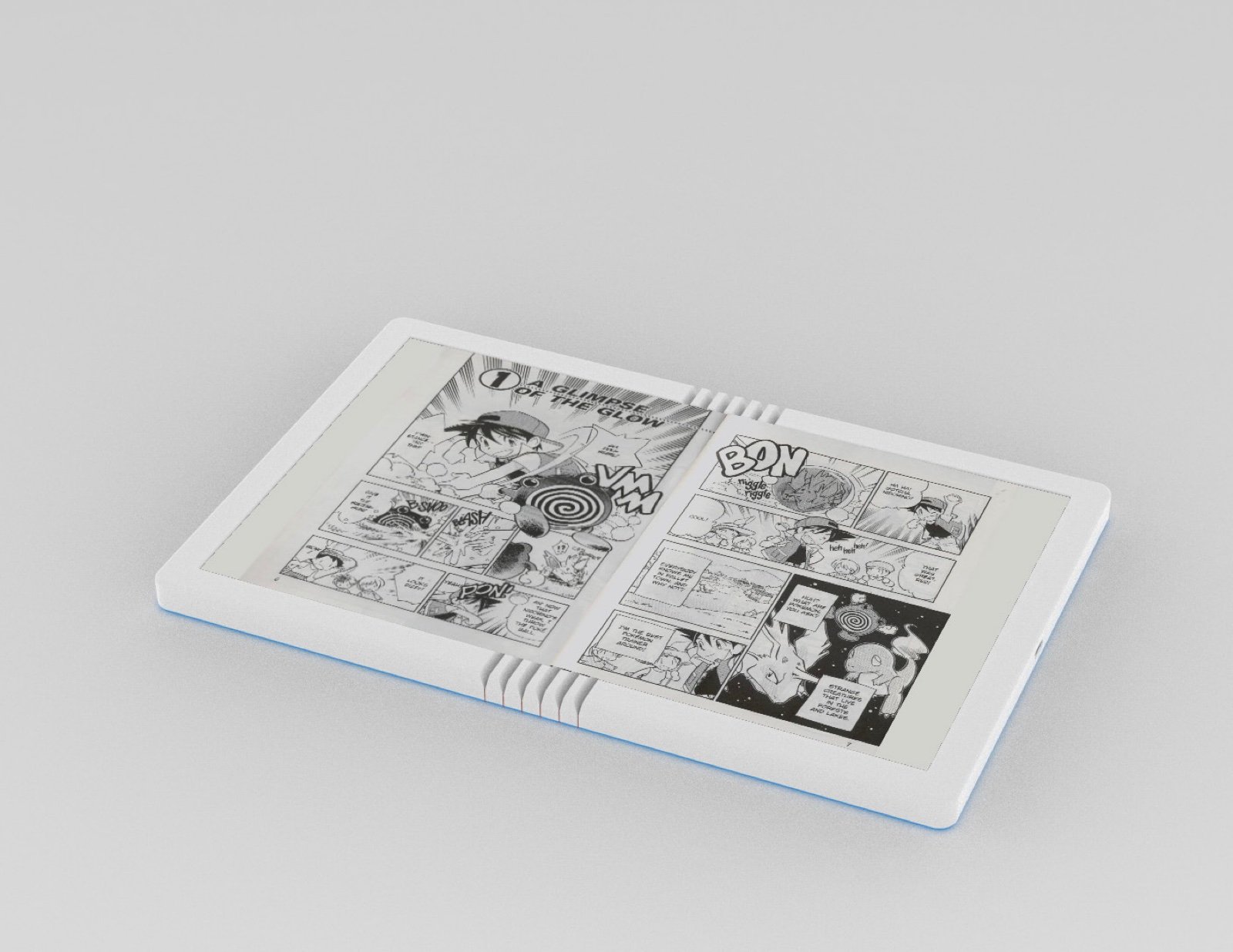
The Omni-Book has three modes that are designed around this screen. When open and held vertically it perfectly supports a single page of a standard American comic. When rotated and held Horizontally it perfectly supports a two page spread of manga or a resized two page spread of a standard American comic, which of course could be zoomed into at the users discretion. When closed the Omnibook takes on a smaller footprint and inherently protects the display from the outer world.

This project was largely influenced by my perception that the comics industry was not doing well. THis perception was indeed true with the comics industry hitting an all time low in 2020. Comic stores were closing temporarily and permanently, left and right. Publishing of comics officially went on hiatus and no new comics were being produced or printed.
In the exact same year however, there was actually a comics boom. People were spending extended periods of time at home, and had more leisure time. Some of those people also had some excess discretionary income. Many people picked up new hobbies that they previously did not have enough time or money to maintain. It was a perfect storm for a comics explosion and digital devices fascilitated unbridled access to comics for little to no money.
This project has been largely influenced by this event and in a way is a thank you to digital devices saving the medium and industry of comics. It tries to finally create a device that gives comics the attention, and readers the experience that they deserve.



Major thanks go out to you all and all those not mentioned! Anything takes a village, let alone an entire capstone project. I, nor the Omni-Book would be where I am today without any of you! Thank you for everything that you have done, and continue to do. I appreciate you.
- Kasper